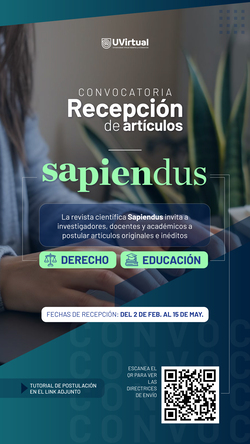
Sextet: Palenque expression of an Afro-Cuban heritage
DOI:
https://doi.org/10.70335/sapiendus.1.1.3Keywords:
Palenque, Culture, Lumbalu, Afro-descendant, MaroonsAbstract
Introduction: In the sugar plantations of the banana zone (Magdalena- Colombia), the Cubans enlivened their working days through musical expressions that they brought from their native Cuba. These manifestations and expressions caught the attention of the Afro-Colombians, because of the rhythm and revelry that the Cubans radiated when performing. All these events awakened the interest and motivation of our Afro-descendants Palanqueros to learn more about these musical currents, which later allowed the appropriation and adaptation of the musical format Sexteto. Objective: The research aims to highlight the musical and cultural contributions that Afro-Cubans transmitted to the Afro-Palanquero descendants in the 20th century. Methodology: This approach was developed from fieldwork that included interviews and participatory observation, allowing access to the closest and most representative sources related to the musical format of the Palanqueros sextet. Through these qualitative techniques, it was possible to deepen the knowledge of musical practices and their historical evolution, facilitating a more detailed understanding of the socio-cultural context in which this tradition has been kept alive. Results: A significant connection between the two cultures was identified, which gave rise to the origin and subsequent development of the Palanqueros sextet. Conclusion: It is concluded that it has been possible to answer the questions existing in society about the origin and subsistence of Palanquero sextet music. This musical genre has not only demonstrated its relevance in the construction of the cultural identity of Afro-Colombian communities but has also contributed significantly to their cultural heritage. In addition, the importance of the Palanquero sextet for the new generations is highlighted, fostering in them a strong sense of belonging and a commitment to the preservation of their cultural roots.
Downloads
References
Andrade Salazar, J. A., Mendoza Vergara, M. F., Zapata Castrillón, K. T., & Sierra Monsalve, L. (2020). Relación entre conflictos de la adolescencia y habilidades sociales en adolescentes de una Institución Educativa de Risaralda. Pensamiento Americano, 13(25), 52–61. https://doi.org/10.21803/pensam.13.25.385
Araujo, E. (2016). Alma caribe programa No. 3 Sexteto Tabalá. Recuperado de: http://hdl.handle.net/20.500.12010/21885.
Arrázola, R. (1970). Palenque, primer pueblo libre de América. Ediciones Hernández.
Banquéz, Ceferina. 16 de Julio de 2016. María la Baja, Bolívar.
Blanco Aguilar, J. (1992). Ochenta años del son y los soneros en el Caribe, 1909-1989. Caracas: Fondo Editorial Tropykos.
Casseres Obeso, Y. P. (2023). “To ané e lo memo”: identificación y etnicidad palenquera en las canciones de kombilesa mí. Una mirada desde el análisis del discurso.
Cassiani, Rafael. Entrevista realizada el 17 de Julio de 2020. San Basilio de Palenque, Bolívar.
Delannoy, L. (2024). ¡ Caliente!: Una historia del jazz latino. Fondo de Cultura Económica.
Domingos Benkos Biohó ( XVI- XVII). Fundador del palenque de San Basilio, Bolivar-Colombia. https://www.senalmemoria.co/benkos-bioho-palenque-de-san-basilio
Escalante, A. (1954). Notas sobre el Palenque de San Basilio, una comunidad negra en Colombia. Divulgaciones etnológicas, 3(5), 207-354.
Flórez, Pabla. Entrevista realizada el 16 de Julio de 2020. María la Baja, Bolívar.
Fonseca Espinosa, A. (2023). El tópico de la negritud en la música latinoamericana: autores y géneros musicales.
Franco, J. (2014). En su estudio Música y memoria en el Caribe colombiano: el Sexteto Tabalá y la herencia musical palenquera. Editorial Universidad del Norte.
Friedemann, N., & Patiño Rosselli, C. (1983). Lengua y sociedad en el Palenque de San Basilio.
Fundacion BAT- sexteto Tabalá de palenque. https://www.fundacionbat.com.co/site2012/interna.php?ids=106&id=25#:~:text=Sexteto%20Tabal%C3%A1%20de%20Palenque&text=Son%20m%C3%BAsicos%20que%20sin%20haber,Cantao%E2%80%9D%2C%20y%20rituales%20F%C3%BAnebres.
Gavalo Herrera, C. (2003) Incidencia de la música y su contexto cultural en la personalidad de los músicos en Palenque de San Basilio. Universidad nacional abierta y a distancia- UNAD.
Herrera, Matilde. Entrevista realizada el 18 de Julio de 2023. Barranquilla, Atlántico.
Iyanaga, M., & Quintero, M. B. (2024). Theoretical Perspectives on Music as Black History in Latin America. In Oxford Research Encyclopedia of Latin American History.
Lam, R. (2019). Esta es la música cubana. Editorial Verbum.
Los Palenques en Colombia (2019) Canal Etnico – TodaColombia, la cara amable de Colombia. http://www.todacolombia.com/etnias-de-colombia/afrocolombianos/palenques.html
Márquez, Basilio. Entrevista realizada el 18 de Julio de 2024. Barranquilla, Atlántico.
Moore, R. D., & Moore, R. (2010). Music in the Hispanic Caribbean: experiencing music, expressing culture. Oxford University Press.
Peláez, O. A., Echeverri, L. F., & Castrillón, E. F. (2024). La percepción instrumentalizada del inglés para la competitividad: un caso de estudio. Pensamiento Americano, 15(29), 45-57. https://doi.org/10.21803/penamer.15.29.416
Pérez García, S. (2011). La tradición oral y la identidad en San Basilio de Palenque.
Ortiz, F., & Le Riverend, J. (1973). Fernando Ortiz (p. 53). Unión de escritores y artistas de Cuba.
Ortiz, F. (2022). Contrapunteo cubano del tabaco y el azúcar.
Pérez Herrera, M. A. (2018). La cultura de la tradición oral son de negro, pajarito y sexteto tres culturas ancestrales dialogantes orientadas como fuente pedagógica. In Congreso de Investigación y Pedagogía III Nacional II Internacional.
Radamés Giro (2009). Diccionario Enciclopédico de la Música en Cuba. Editorial Letras Cubanas, La Habana.
Ruidiaz. A.R (2020). Interaccion entre las tradiciones musicales de Norteamerica y Cuba. https://www.academia.edu/44346154/Interacci%C3%B3n_entre_las_tradiciones_musicales_de_Norteam%C3%A9rica_y_Cuba
Sexteto Tabalá (2016). Reyes del son Palenquero. Palenque Records.https://palenquerecords.bandcamp.com/album/sexteto-tabala-reyes-del-son-palenquero
Tovar, L. D. M. M. (2024). Sonidos de resistencia. Música y memoria en las Colombias afrodiaspóricas. Revista de Historia de América, (169), 187-221.
Zapata Olivella, Manuel. (2016). Un legado intercultural. Perspectiva intelectual, literaria y política de un afrocolombiano cosmopolita. Fundación Universitaria de Popayan. Bogotá, Colombia: Ediciones desde abajo.
Additional Files
Published
Issue
Section
License
Copyright (c) 2025 Sapiendus

This work is licensed under a Creative Commons Attribution-NonCommercial-NoDerivatives 4.0 International License.
The author or authors of an article accepted for publication in the Journal Pensamiento Americano will transfer all of the patrimonial rights to the American University Corporation free of charge, within which are included: the right to edit, publish, reproduce and distribute both print media as digital, in addition to include in article in international indexes and / or databases, likewise, the Editorial Seal is authorized to use the images, tables and / or any graphic material presented in the article for the design of covers or posters from the same magazine. By assuming the patrimonial rights of the article, it may not be partially or totally reproduced in any printed or digital media without its express permission.
AUTHORITY ASPECTS
For the Pensamiento Americano Journal, all the authors of an article have made substantial contributions to the research and the manuscript, and they share the responsibility when the article presents errors, fraud in some way or violations of copyright.
After submitting an article, the journal does not accept the addition, deletion or change in the order of the authors, in addition we reserve the right to release the article when it has been submitted to the journal and under no circumstances will American Thought accept the article. withdrawal of an article during any phase of the editorial process